
Verify Dalton Voter Registration
The Georgia My Voter Page, or MVP, is the first stop for a Dalton voter checking a personal record. It verifies identity before showing the record. It is not an open name directory and should not be used to test someone else's birth dates. Select Whitfield County for a person registered at a Dalton address within the county, then enter the registration name and date of birth. The lookup is free.
| Field | Type | Required | Notes / Format |
|---|---|---|---|
| First Initial | Text | Yes | Enter the first-name initial. |
| Last Name | Text | Yes | Use the registration surname; try the legal compound form. |
| County | Dropdown | Yes | Choose Whitfield for Dalton registrants. |
| Date of Birth | Date | Yes | Identity input, not a public result field. |
| Submit / Search | Button | After entry | Runs the verification. |
A valid match can return registration status, county-held information, the assigned poll place, early-voting sites, districts, and elected officials. It may also show a sample ballot and mail-in or provisional-ballot status. The official Georgia voter guide explains those results.
The state guide's lookup screen is shown below so a Dalton voter can recognize the official process before entering private data.
This is guidance; MVP remains the live personal verification tool.
Read Dalton MVP Results
A match answers practical election questions, but it does not open the statewide voter file. Check status first. Then review the precinct and poll place, since a move can change both. District details show which contests apply. Sample ballots help a voter prepare, while absentee and provisional indicators track a specific process.
Does participation history show a choice? No. A voter record may state that a person took part in an election, but the secret ballot protects every selection. Georgia also does not register voters by political party. Primary participation is not a declared party affiliation.
Note: Save current poll details near an election because locations and assigned districts can change after a move or redistricting.
When Dalton Voter Lookup Fails
A no-match screen is not proof that no record exists. The initial may differ from the name on file, a compound surname may be entered another way, or the county may reflect an old address. A Dalton mailing address can also fall outside the expected city boundary while remaining in Whitfield County.
Check spelling, county, and current personal facts once. If the result still fails, use the Whitfield County Registrar and Elections office. The registrar handles local registration, corrections, precinct cards, and questions about one record. The Secretary of State runs MVP and statewide file orders.
Inside Georgia Voter Records
Georgia law makes defined voter-list fields public, but the released record is narrower than the data used to register or verify a voter. Under O.C.G.A. §21-2-225, the public inventory can connect a name with jurisdiction and participation. It is not proof of present location or views. Mailing and residence fields can differ.
| Voter name | Public; keep middle names and suffixes when supplied. |
|---|---|
| Residence address | Public unless protection applies; it is the registration residence. |
| Mailing address | Public when different, subject to protected-address handling. |
| Election geography | County, municipality, precinct, and district information. |
| Registration status | Registration context that may include active or inactive status. |
| Participation history | Elections in which the voter took part, never choices. |
| Party affiliation | Georgia has no party registration field. |
Confidential under Georgia law. The public list omits full birth date, Social Security number, driver's license or state ID number. O.C.G.A. §21-2-225 governs released fields, while protected-address rules require special handling.
Protected Dalton Voter Addresses
Georgia's Secretary of State administers Safe at Home, an address-confidentiality program active in 2026. It gives qualified survivors a substitute public mailing address and forwards mail. The program changes how an address appears in public records. It does not invite anyone to reconstruct the residence through other databases.
That safeguard matters when reading Dalton voter records. A substitute address is a privacy control, not a data error. Never publish, test, or try to reverse a protected location. Let the custodian apply the required process.
Safe at Home launched in Georgia in July 2026, so older summaries that say the state lacks an address-confidentiality program are out of date. The substitute address can appear in place of a protected residence while mail is routed through the program. It is not meant to erase every historical record. Readers should respect the current protected value and avoid linking it back to older address sources.
The state organization directory provides an official route to the responsible agency.
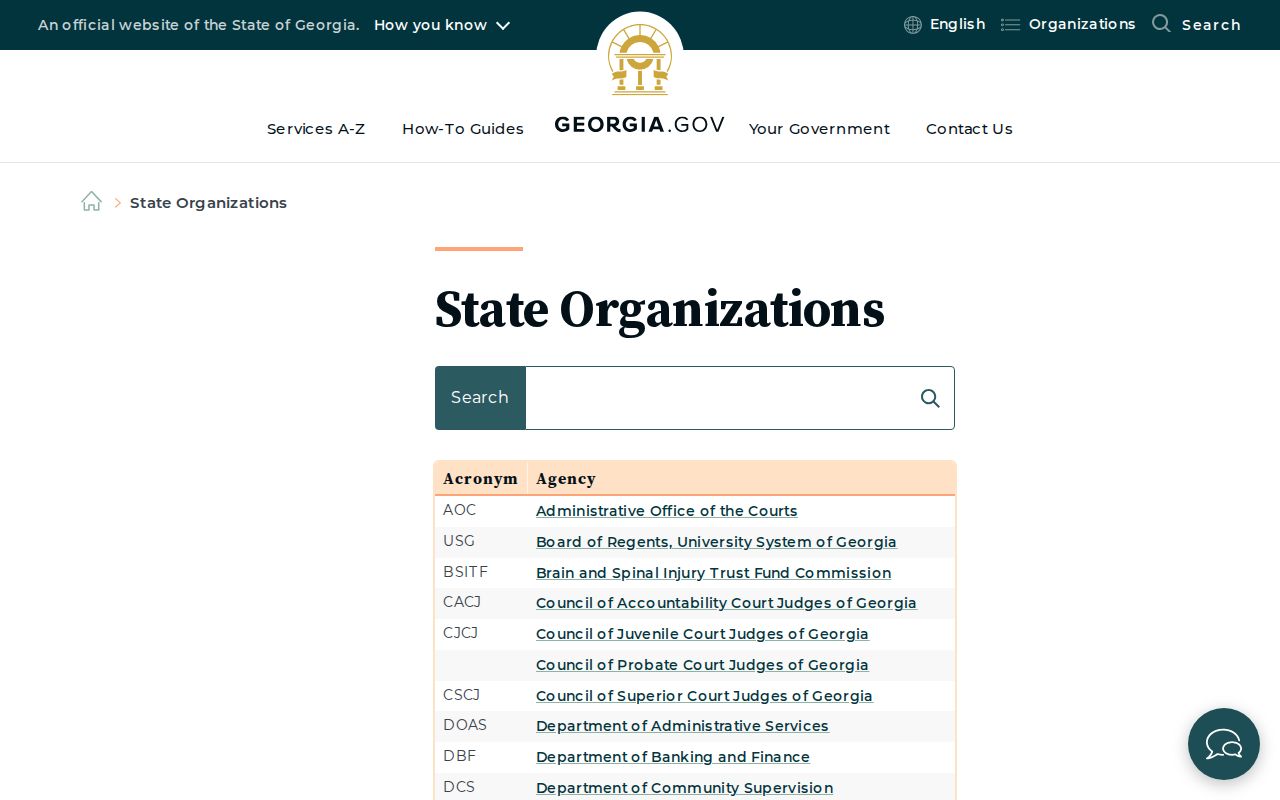
Use that government starting point when program pages or contacts change.
Dalton Voter Roll Status Changes
Active, inactive, and cancelled mean different things. A record may become inactive after an official address-confirmation process under state and federal list-maintenance rules. Inactive does not mean erased. Cancellation can follow death, a move, or a voter or family request through an authorized process.
Federal National Voter Registration Act rules constrain the timing and steps for systematic removal. Georgia also offers a cancellation form. For one Dalton record, ask the Whitfield registrar what the status means and what proof can correct it. The Georgia Election Data Hub reports active and inactive statistics, but a total cannot settle one person's status.
Note: Treat a dated voter-file export as a snapshot, then confirm current status through MVP or the Whitfield registrar.
Order Dalton Voter Registration Files
The Secretary of State voter-list order page is the official route for public products. Choose geography with care. A Dalton municipal list and Whitfield County list are different products. Precinct and district orders are narrower. The form or store asks for purchaser and delivery details, order type, county or municipality identifiers, format, quantity, payment method, and acknowledgement.
- Open the current store or PDF and select the exact geography and file type.
- Provide purchaser and delivery details, then review the required acknowledgement.
- Confirm format, price, and delivery terms before paying.
- Pay in advance by an accepted check, money order, or store credit card method.
Mail orders go to Secretary of State, 2 Martin Luther King Jr. Drive, Suite 802 West Tower, Atlanta, GA 30334. Starter checks are not accepted. A returned check carries a $40 fee. Check the page at purchase time because forms can change.
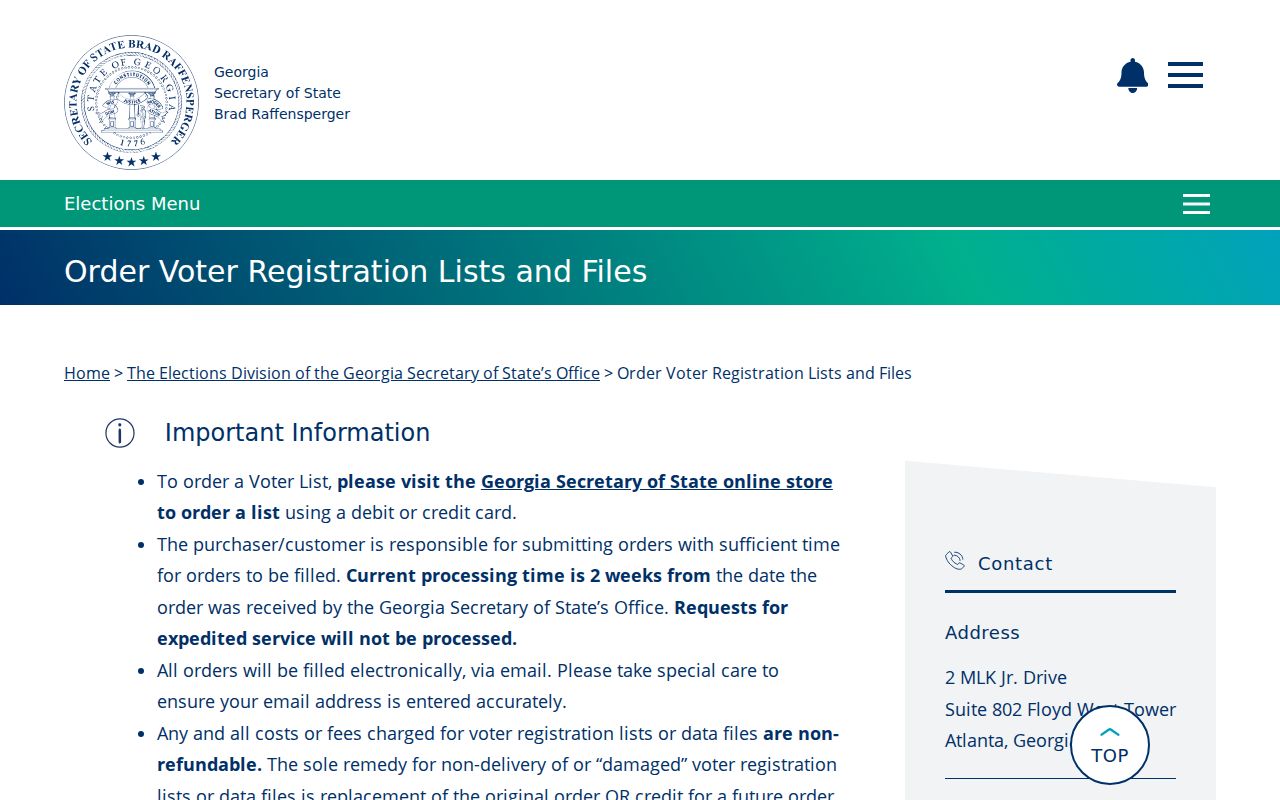
The page separates paid file orders from personal MVP checks.
The state product is also distinct from discrete election files held locally. Contact the Whitfield registrar for a personal correction, precinct card, or a clearly described local election record. Use the statewide order process for a defined public list. This division prevents a request for one personal status check from turning into an unneeded bulk purchase.
Dalton Voter List Prices
The policy adopted July 15, 2024, and effective July 1, 2024, set the prices below. These are dated figures, so verify checkout. The policy allows no custom orders and no refunds. For damaged or missing delivery, the state may approve replacement or credit.
| Voter-list product | Policy price | Local scope |
|---|---|---|
| Municipal list | $65 | Dalton |
| County list | $70 | Whitfield County |
| Municipal precinct, up to five | $35 | Selected city precincts |
| Municipal district | $45 | Selected city district |
| County precinct, up to five | $35 | Selected county precincts |
| County district | $45 | Selected county district |
| Congressional district | $125 | Broader district |
Use limits carry penalties. O.C.G.A. §21-2-601 prohibits commercial use of elector lists supplied under §21-2-225 and makes a violation a misdemeanor. Public access never permits stalking, threats, harassment, or attempts to expose protected voters.
Dalton Voter Records Requests
A general open-records form cannot bypass voter-file privacy limits. Agencies release public portions and withhold protected identifiers. For the broader procedure and custodian rules, use the Dalton public records guide. Voter registration administration stays with the registrar and Secretary of State.
Georgia's Open Records Act generally requires access, a response, or a written timetable and cost or exemption notice within three business days. That deadline does not make confidential voter identifiers public, and it does not require an agency to create a new compilation. Ask for an existing record with a clear date range and subject. The elector-list order system remains the right route when the state already offers the desired product.
The governor's open-records request example shows how a focused state request works.
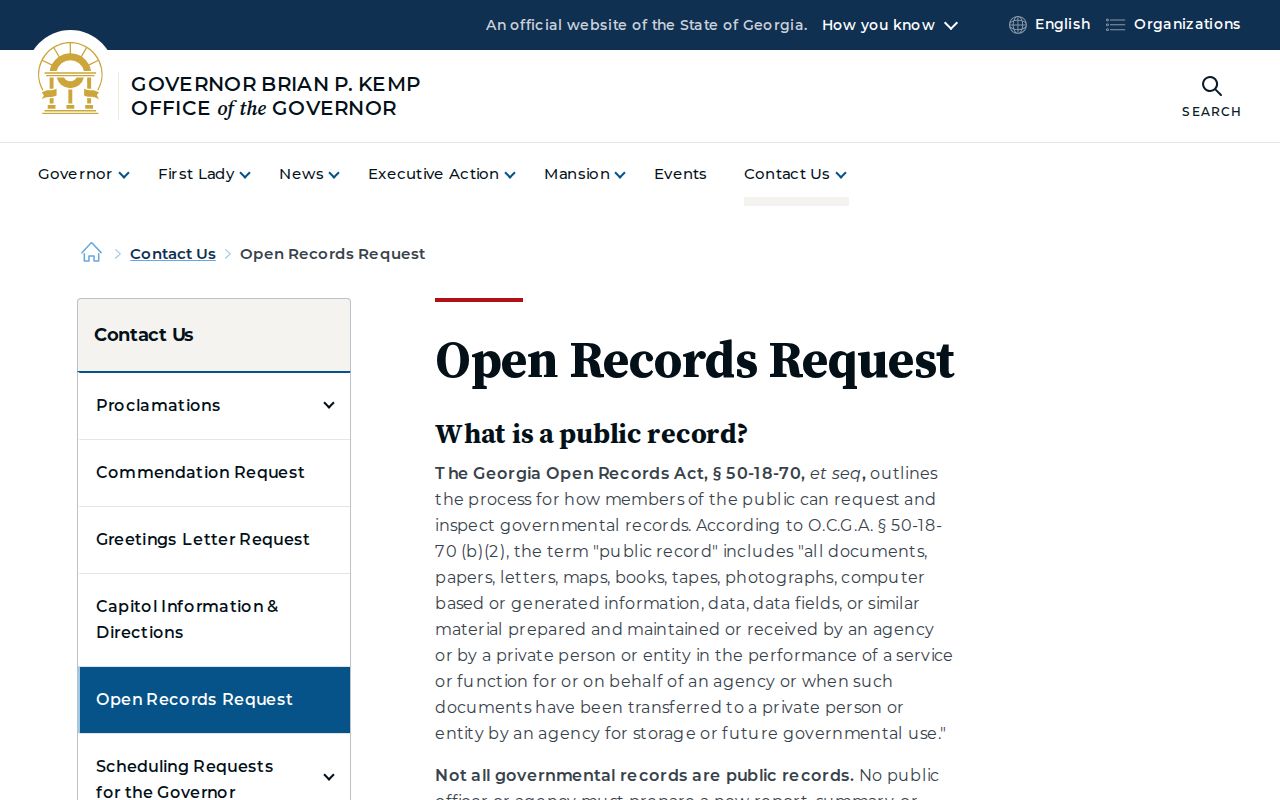
It gives process context, not a substitute voter-list store or access to confidential fields.
Trace Historic Whitfield Voter Rolls
Older election research uses another chain. Search Georgia Archives county inventories, then ask the Whitfield registrar and local historical groups about surviving poll books or registration registers. No official online description establishes exact Whitfield coverage years, so do not assume a complete run or quote an unsupported start date.
Whitfield County was created in 1851, and durable county series generally begin around 1852. That gives jurisdiction context, not proof that voter rolls survive from the first year. Earlier residents may require predecessor-county, Cherokee Nation, federal, church, or newspaper sources. A historic participation mark still cannot disclose a ballot choice.
For a named ancestor, start with an approximate election year and known Whitfield residence. Ask whether the surviving item is a poll book, registration register, precinct return, or another election series. Those terms describe different records. Compare any entry with a dated city directory, deed, probate file, or newspaper notice rather than treating a same-name entry as conclusive identity.